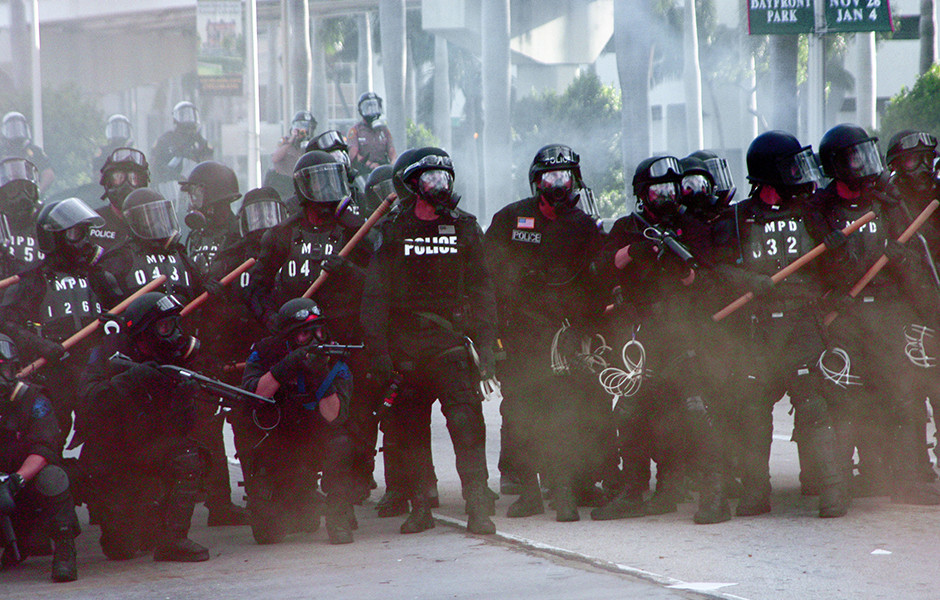
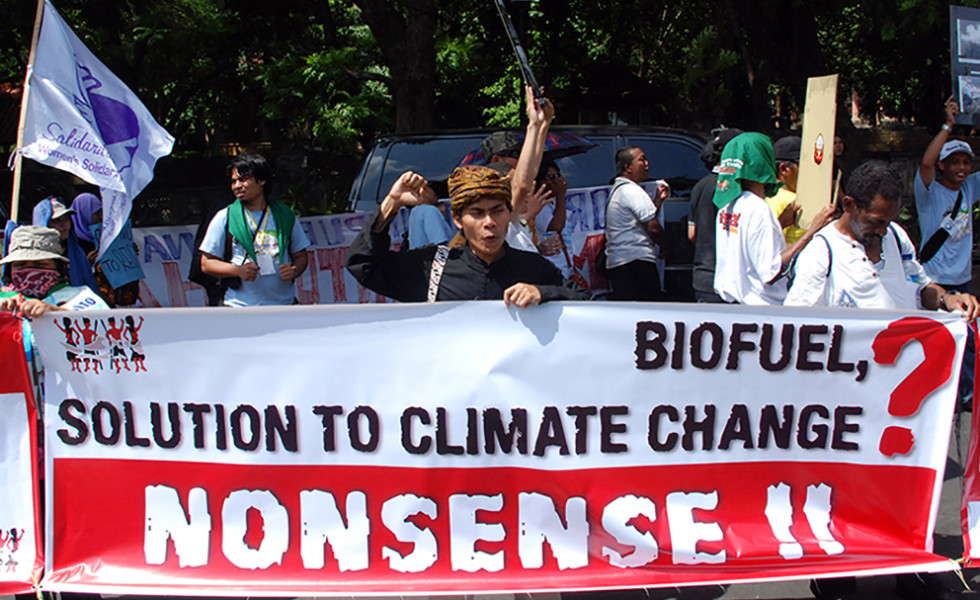
Category Archives: Green Economy

“Carbon farming” makes waves at stalled Bonn talks

By Stephen Leahy, June 12, 2013. Source: Inter Press Service

Civil society organisations warn that if agriculture becomes part of a carbon market, it will spur more land grabbing in Africa. Photo: Patrick Burnett/IPS

Civil society organisations warn that if agriculture becomes part of a carbon market, it will spur more land grabbing in Africa. Photo: Patrick Burnett/IPS

UXBRIDGE, Canada – U.N. climate talks have largely stalled with the suspension of one of three negotiating tracks at a key mid-year session in Bonn, Germany.

Meanwhile, civil society organisations claim the controversial issue of “carbon farming” has been pushed back onto the agenda after African nations objected to the use of their lands to absorb carbon emissions.

At the Bonn Climate Change Conference this week, Russia insisted on new procedural rules. That blocked all activity in one track of negotiations called the “Subsidiary Body for Implementation” (SBI). The SBI is a technical body that was supposed to discuss finance to help developing countries cope with climate change, as well as proposals for “loss and damage” to compensate countries for damages.

The SBI talks were suspended Wednesday.

“This development is unfortunate,” said Christiana Figueres, executive secretary of the U.N. Framework Convention on Climate Change (UNFCCC). Continue reading

Leave a Comment

Filed under Africa, Bioenergy / Agrofuels, Carbon Trading, Climate Change, Climate Justice, Commodification of Life, Corporate Globalization, Ending the Era of Extreme Energy, False Solutions to Climate Change, Food Sovereignty, Green Economy, Industrial agriculture, Land Grabs, REDD, The Greed Economy and the Future of Forests, World Bank

Panama: Campesinos demonstrate against dams

June 11, 2013. Source: WW4 Report

Members of 27 campesino communities in the San Francisco district of Panama’s western Veraguas province held a protest on June 7 to demand the cancellation of permits given for the construction of the Lalin 1, Lalin 2 and Lalin 3 hydroelectric projects on the Gatú river. The protesters charged that there were irregularities in the environmental impact studies for the dams. They also said that they hadn’t been consulted on the projects and that the companies involved were ignoring an order from San Francisco’s mayor to suspend construction. The communities proposed the promotion of cooperatives, ecological tourism and farming based on ecological principles as alternatives to what they consider the government’s bad development policies. The demonstration ended without incident, although the protesters complained about the presence of investigative and anti-riot police. Veraguas’ governor agreed to start negotiations with the campesinos. (Radio Temblor, Panama, June 7)

Meanwhile, the indigenous Ngöbe Buglé are continuing to protest the Barro Blanco hydroelectric project in their territory in the western province of Chiriquí. According to Ricardo Miranda, a spokesperson for the April 10 Movement, various communities in the area carried out actions on May 24 to demand the project’s cancellation. Miranda called on traditional Ngöbe-Buglé leader (cacica) Silvia Carrera to give up on the negotiations being held with the government at the United Nations (UN) office in Panama City. Even though an independent study mandated by a UN report last year still hasn’t been completed, Generadora del Istmo, S.A. (GENISA), the Honduran-owned company building the dam, says the project is now 40% complete. The company indicated that it was reforesting the area around the dam to compensate for clearing done in the construction. (Radio Nacional de Venezuela, May 27, some from Prensa Latina)

Leave a Comment

Filed under Actions / Protest, Corporate Globalization, Ending the Era of Extreme Energy, Energy, False Solutions to Climate Change, Forests, Green Economy, Hydroelectric dams, Indigenous Peoples, Land Grabs, Latin America-Caribbean, Rights, Resilience, and Restoration, The Greed Economy and the Future of Forests, Water

Brazil: Top Indigenous official resigns amid Belo Monte dam protests

June 11, 2013. Source: WW4 Report

March on June 6th against the Belo Monte dam.  Photo: Agência Brasil

March on June 6th against the Belo Monte dam. Photo: Agência Brasil

Security guards shot and seriously injured an indigenous Terena, Josiel Gabriel Alves, on June 4 when a group of about 60 protesters tried to occupy the São Sebastião estate in Sidrolandia municipality in the southern Brazilian state of Mato Grosso do Sul. Doctors said Gabriel might lose the use of his arms and legs. This was the second shooting in less than a week in an ongoing dispute over lands claimed by the Terena: Osiel Gabriel, Josiel Gabriel’s cousin, was killed by federal police on May 30 at a nearby estate. The Terena have been occupying several large estates in Sidrolandia since May 15; they say the estates are on land the federal government designated as indigenous territory in 2010. The 28,000 Terena live on just 20,000 hectares in Mato Grosso. (Adital, Brazil, June 5)

On June 6 Terena activists joined with representatives of the Munduruku indigenous group for protests at government offices in Brasilia. The Munduruku are among eight indigenous groups that have repeatedly occupied construction sites at the Belo Monte dam in the northern Brazilian state of Pará over the past year; the most recent occupation took place on May 28. The protests have held up work on the dam, which is projected to be the world’s third largest when completed. Some 140 Munduruku were in Brasilia for a meeting with Presidency Minister Gilberto Carvalho and other government officials on June 4. Valdenir Munduruku, a spokesperson for the group, told Brazilian media that the activists are demanding a complete halt of construction until indigenous people in the region have been consulted on the project, as required by International Labor Organization (ILO) Convention 169. Brazil has signed on to the convention, which guarantees a number of rights for indigenous people, including the right to prior consultation on projects that will affect their communities. The Munduruku are threatening to resume the occupation if they aren’t satisfied with the results of negotiations. Continue reading

Leave a Comment

Filed under Actions / Protest, Climate Justice, Ending the Era of Extreme Energy, Energy, False Solutions to Climate Change, Forests, Green Economy, Hydroelectric dams, Indigenous Peoples, Land Grabs, Latin America-Caribbean, Political Repression, The Greed Economy and the Future of Forests, Water

Breaking: Guna General Congress rejects REDD+ in Panama

12 June, 2013. Source: Forest Peoples Programme

Photo: Migrant Diaries

Photo: Migrant Diaries

Guna General Congress in Panama takes historic decision: Guna Yala territory free from REDD+, June 2013

During its meeting on 9th June, the Guna General Congress in Panama took the historic decision to reject all REDD+ projects in the Gunayala territory. Alongside this rejection of all REDD+ projects, the Congress took the specific decision to reject a proposed REDD+ pilot project in the region, after 2 years of public consultations.

For more information, click here to read the Congress’ resolution (only available in Spanish).

Leave a Comment

Filed under Carbon Trading, Climate Change, Climate Justice, Commodification of Life, False Solutions to Climate Change, Forests, Forests and Climate Change, Green Economy, Indigenous Peoples, Land Grabs, Latin America-Caribbean, REDD, Rights, Resilience, and Restoration, The Greed Economy and the Future of Forests

Tree plantations and bioenergy with carbon capture: far from “safe” geoengineering

Note: South Carolina-based ArborGen has a request pending with the USDA to commercialize genetically engineered (GE) eucalyuptus, with plans to sell millions of trees for planting in monoculture plantations from South Carolina to Texas.  With loony proposals like BECCS gathering steam and corporate backing, it’s even more crucial that we stop GE trees like ArborGen’s flammable and invasive GE eucalyptus.

Take action today by signing Global Justice Ecology Project’s petition demanding a ban on the release of Genetically Engineered trees into the environment: http://globaljusticeecology.org/petition.php

-The GJEP Team

By Almuth Ernsting, June 11, 2013. Source: Hands Off Mother Earth

Photo: ncsu.edu

Photo: ncsu.edu

Amongst geoengineering methods, ‘afforestation’,  Bioenergy with Carbon Capture and Storage (BECCS) and biochar are commonly promoted as ‘safe’, benign’ or ‘soft’ options – unlike, say, shooting sulphur particles into the stratosphere.

According to a 2011 report by the International Panel on Climate Change, “combining biomass conversion with developing carbon capture and storage (CCS) could lead to long-term substantial removal of GHGs from the atmosphere (also referred to as negative emissions).”  And the UK’sRoyal Society report on geoengineering in 2009 concluded that ‘afforestation, BECCS and biochar all scored high on safety – though not on effectiveness, timeliness and (except for ‘afforestation’) affordability.

All of those methods would require land conversions on a vast scale.  The experience with biofuels has shown that there are no mechanisms to prevent the development of a big new market for biomass from leading to large-scale deforestation, land-grabbing, human rights abuses and hunger (as land previously used to grow food is turned over to biofuel crops and trees).  Yet despite their massive impacts, biofuels still only supply 3% of global transport fuel.  Any attempt at removing substantial amounts of carbon dioxide from the atmosphere through charring and/or burying biomass – or burning it and capturing some of the carbon – would have to involve land-conversions on a far bigger scale than has happened for biofuels so far.  Concluding that such a mega-project would be ‘safe’ requires a strange definition of ‘safety’. It requires us to ignore the fundamental role of land and how it is used.  Continue reading

Leave a Comment

Filed under Biodiversity, Bioenergy / Agrofuels, Climate Change, Ending the Era of Extreme Energy, False Solutions to Climate Change, Forests, Forests and Climate Change, Geoengineering, Green Economy, Greenwashing, Land Grabs, The Greed Economy and the Future of Forests

“Here we are again.” REDD discussions in Bonn, June 2013

By Chris Lang, June 11, 2013. Source: REDD-Monitor

Photo: Wikipedia

Photo: Wikipedia

Safeguards. Reference levels. Non-carbon benefits. Drivers of deforestation and degradation. Non-market-based approaches. Measuring, reporting and verifying. Results-based finance. Adequate and predictable support. Institutional arrangements.

Yes, it’s the REDD negotiations at the UNFCCC. Again. Between 3-13 June 2013, UN climate change negotiators are meeting in Bonn, Germany.

Philippines negotiator Tony La Viña comments on Facebook, below a photograph of the Maritim Hotel where the meetings are taking place:

Here we are again. It was in the Maritim in Bonn where we negotiated most of the Kyoto Protocol in 1997. Every year since then we meet here at least once, sometime twice a year. Now, 16 years later, we are negotiating yet again a new climate change agreement which will hopefully be adopted in Paris in 2015.

REDD, of course, was not part of the Kyoto Protocol. It may well be part of the Paris agreement. Before the meetings in Bonn started, CIFOR produced a useful overview of the issues relating to REDD to be discussed in Bonn. Continue reading

Leave a Comment

Filed under Carbon Trading, Climate Change, False Solutions to Climate Change, Forests, Forests and Climate Change, Green Economy, Land Grabs, REDD, The Greed Economy and the Future of Forests, UNFCCC

First “small modular” nuclear reactors planned for Tennessee

By Will Ferguson, June 5 2013. Source: National Geographic

Small modular nuclear reactors, like the one seen illustrated here by the firm Babcock and Wilcox, bring together components that are usually housed separately at full-scale plants. That design feature can boost safety or increase vulnerability, depending on whom you ask.  Illustration: Babcock & Wilcox Nuclear Energy

Small modular nuclear reactors, like the one seen illustrated here by the firm Babcock and Wilcox, bring together components that are usually housed separately at full-scale plants. That design feature can boost safety or increase vulnerability, depending on whom you ask. Illustration: Babcock & Wilcox Nuclear Energy

Near the banks of the Clinch River in eastern Tennessee, a team of engineers will begin a dig this month that they hope will lead to a new energy future.

They’ll be drilling core samples, documenting geologic, hydrologic, and seismic conditions—the initial step in plans to site the world’s first commercial small modular nuclear reactors (SMRs) here.

Once before, there was an effort to hatch a nuclear power breakthrough along the Clinch River, which happens to meander through the U.S. government’s largest science and technology campus, Oak Ridge, on its path from the Appalachian Mountains to the Tennessee River.

In the 1970s, the U.S. government and private industry partners sought to build the nation’s first commercial-scale “fast breeder” reactor here, an effort abandoned amid concerns about costs and safety. Today, nuclear energy’s future still hinges on the same two issues, and advocates argue that SMRs provide the best hope of delivering new nuclear plants that are both affordable and protective of people and the environment. And even amid Washington, D.C.’s budget angst, there was bipartisan support for a new five-year $452 million U.S. government program to spur the technology. Continue reading

Leave a Comment

Filed under Ending the Era of Extreme Energy, Energy, Green Economy, Nuclear power

Brazil calls in army to defuse conflicts over Indian lands

By Anthony Boadle and Caroline Stauffer, June 4 2013. Source: Reuters

Munduruku Indians pass through a metal detector as they arrive for a meeting with the Minister of the General Secretariat of the Presidency, Gilberto Carvalho, at the Planalto Palace in Brasilia, June 4, 2013. Photo: Reuters/Ueslei Marcelino

Munduruku Indians pass through a metal detector as they arrive for a meeting with the Minister of the General Secretariat of the Presidency, Gilberto Carvalho, at the Planalto Palace in Brasilia, June 4, 2013. Photo: Reuters/Ueslei Marcelino

BRASILIA/SAO PAULO - President Dilma Rousseff’s government said on Tuesday it would send 110 federal troops to the Brazilian farm state of Mato Grosso do Sul to try to prevent more violence between Indians claiming their ancestral territory and ranchers.

The government has been struggling to defuse tensions with indigenous tribes over farmland in several states as well as over hydroelectric dams in the Amazon.

Tensions escalated in a disputed property in Mato Grosso do Sul that was invaded last week for a second time by Terena Indians angered by the fatal shooting of one of their tribe’s members. Local media said the man’s cousin was shot and injured on a nearby ranch on Tuesday.

“We must avoid radicalizing a situation that goes back a long way in Brazilian history,” Justice Minister Jose Cardozo told reporters after meeting lawmakers from Mato Grosso do Sul in Brasilia. Continue reading

Leave a Comment

Filed under Actions / Protest, Ending the Era of Extreme Energy, Energy, Green Economy, Hydroelectric dams, Indigenous Peoples, Land Grabs, Latin America-Caribbean, Water

Landgrabbing to provide Horn of Africa with electricity

By Ed McKenna, June 5, 2013. Source: Inter Press Service

Ethiopia invests more of its resources in hydropower than any other country in Africa – one third of its total GNP of about 77 billion dollars. Photo: William Davison/IPS

Ethiopia invests more of its resources in hydropower than any other country in Africa – one third of its total GNP of about 77 billion dollars. Photo: William Davison/IPS

ADDIS ABABA – Ethiopia’s long-term hydropower strategy is proving to be both a source of economic sustenance and contention. In becoming Africa’s leading power exporter through the construction of a series of dams across the country, Ethiopia could threaten the lives of millions who depend on the Nile River’s waters.

This Horn of Africa nation invests more of its resources in hydropower than any other country in Africa – one third of its total GNP of about 77 billion dollars.

But at the centre of Ethiopia’s hydropower development is a tough ethical question: which has the greater negative impact?

Alessandro Palmieri, a lead dam specialist at the World Bank, told IPS: “Is it the impact on Ethiopia’s population (who will not have electricity) … or the negative impact on half a million people (who will be displaced by the construction of the dams)? One tree falling always makes more sound than 10,000 trees growing.”

Ethiopia has ambitious targets. It currently generates 2,000 MW from six hydroelectric dams and will increase its power generation to 15,000 GWh, according to state power provider Ethiopian Electric Power Corporation(EEPCO). Continue reading

Leave a Comment

Filed under Africa, Climate Justice, Ending the Era of Extreme Energy, Energy, False Solutions to Climate Change, Green Economy, Hydroelectric dams, Land Grabs, The Greed Economy and the Future of Forests, Water, World Bank

Photo Essay: Three brutally arrested protesting GE trees at industry conference

30 May, 2013

All photographs by Orin Langelle/ photolangelle.org for GJEP

_10m30_DSCN1302 Police use pain compliance holds as they wrestle a protester to the ground.  Activists were attempting to wrap a bus departing from the industry conference in GMO caution tape.

_7m30_DSCN1319 A local organizer with Katuah Earth First! is thrown to the ground and arrested in front of the bus.


_1m30_DSCN1380 Will Bennington, an organizer with Global Justice Ecology Project and the Campaign to STOP GE Trees prior to being thrown into an Asheville Police paddy wagon.


_12m30_DSCN1246 “You Spoil Our Forests – We Spoil Your Dinner” banner refers to blocking conference participants from attending an exclusive dinner at the Biltmore Estate – birthplace to industrial forestry in the US.


_11m30_DSCN1251 Tree Engineer and industry mouthpiece Steve Strauss takes photos of the protesters as they chant at him.  A security guard laughs.


_13m30_DSCN1335 Local Katuah EF! zombie organizer.


_9m30_DSCN1311 Police brutally pull and yank on peaceful activists


_8m30_DSCN1318 Police wrestle and throw to the ground a local woman organizer.


_6m30_DSCN1358


_5m30_DSCN1359


_4m30_DSCN1363 Zombie “Franken-tree” demonstrators bang on pots and pans and chant anti-GE tree slogan as arrests continue.


_3m30_DSCN1371 Protesters vow that resistance will continue.


_2m30_DSCN1378

12 Comments

Filed under Actions / Protest, Biodiversity, Climate Change, Commodification of Life, Corporate Globalization, Energy, False Solutions to Climate Change, Forests, Forests and Climate Change, GE Trees, Green Economy, Greenwashing, The Greed Economy and the Future of Forests, Tree Biotech 2013