Category Archives: Events

KPFK Sojourner Truth Earth Watch: On the ground at the World Social Forum in Tunisia with Cindy Wiesner

kpfk_logo

Cindy Wiesner, Director of Grassroots Global Justice Alliance, joins us from the World Social Forum in Tunisia, happening from March 26-30th.

Global Justice Ecology Project teams up with KPFK’s Sojourner Truth show for weekly Earth Minutes every Tuesday and Earth Watch interviews every Thursday.

Leave a Comment

Filed under Africa, Climate Change, Climate Justice, Events, Rights, Resilience, and Restoration, Women

Tunisia, origin of the ‘Arab Spring’, hosts the March 2013 World Social Forum

By Ashley Pinkerton, March 13, 2013. Source: Food First

Photo: Food First

Photo: Food First

In Tunisia, March 26-30th, the World Social Forum (WSF) will take place in the city of Tunis, on the El Manar University campus. Activists around the world look to the international, bi-annual meeting as an important space for building solidarity and creating an alternative globalization. Tunis – the place that sparked the ‘Arab Spring’ – seems particularly fitting for discussing justice, peace and democracy at this year’s WSF.

The inaugural WSF was held in Porto Alegre, Brazil in 2001, promoted by French and Brazilian NGOs, trade unions, and individuals as a counterpoint to the annual “Davos” meeting in the Swiss Alps where the world’s most powerful political figures and corporate heads meet to discuss global affairs – and ski, apparently. However, the initial WSF was also a manifestation of mounting global tensions: the 1980s saw food riots in the South provoked by the IMF-imposed end of food subsidies, as well as protests by indigenous and environmental groups against dam projects promoted by the World Bank. Throughout the 1990s, there were protests against Structural Adjustment Programs in South countries, as well as the Zapatista movement in response to NAFTA, and major protests in the global North such as Seattle 1999 and Prague 2000 [1]. Continue reading

3 Comments

Filed under Africa, Bioenergy / Agrofuels, Climate Change, Climate Justice, Events, Indigenous Peoples, Land Grabs, Rights, Resilience, and Restoration

Global Justice Ecology Project to Receive 2013 International White Dove Award

We’re celebrating our 10th Anniversary this year!


Global Justice Ecology Project is being awarded the 2013 International White Dove Award this Friday evening from the Rochester Committee on Latin America (ROCLA) in Rochester, NY.

The White Dove Award honors GJEP’s long-time international work to protect the environment, defend the rights of Indigenous Peoples, preserve forests, and stop the release of genetically engineered trees.  For many years GJEP’s co-founders Orin Langelle and Anne Petermann have worked in solidarity with social movements, communities and organizations from around the world with a focus on Mexico, Central America and South America.

This awards dinner also marks the 40th anniversary of ROCLA–which was founded in response to the coup by brutal Chilean dictator Pinochet.  GJEP Executive Director Anne Petermann points out that some of the first work GJEP did was in solidarity with the Mapuche people of Chile who are still fighting for the return of their ancestral lands, stolen by the Pinochet regime and given to timber multinationals.

But the US has always treated Latin America as a ‘resource colony’ for cheap resources and labor.  The struggle for the land and the struggle for peoples’ self-determination are two sides of the same coin.

Over the years, GJEP Board Chair Orin Langelle has organized many delegations to Nicaragua’s Bosawas rainforest and to Chiapas, Mexico in rebel Zapatista territory.  He directs Langelle Photography and will show slides of GJEP’s work at the Award’s dinner.

“I approach my role as a concerned photographer by not merely documenting the struggle for social and ecological justice, but by being an active part of it,”

“My photography is an historical look at social movements, struggle and everyday life.  It is designed to counter the societal amnesia from which we collectively suffer-especially with regard to the history of social and ecological struggles. This is not merely a chronicling of history, but a call out to inspire new generations to participate in the making of a new history.  For there has been no time when such a call has been so badly needed.”  –Orin Langelle


The International White Dove Award will be presented at ROCLAs Annual Rice & Beans Dinner, Friday, March 1, 2013, 5:30 PM at Gates Presbyterian Church 1049 Wegman Road, Rochester, NY.

Leave a Comment

Filed under Climate Change, Climate Justice, Events, Forests, GE Trees, Indigenous Peoples, Latin America-Caribbean

Explosion at Pemex headquarters leaves 32 dead

By Damien Cave and Karla Zabludovsky, February 1, 2013.  Source: NY Times

Photo: Ginnette Riquelme for The New York Times

Photo: Ginnette Riquelme for The New York Times

The sudden explosion at the headquarters of Mexico’s state-owned oil company killed at least 32 people and injured 121, officials said on Friday, a day after the powerful blast shattered windows, shook the ground and sent thousands of employees fleeing into a panicked downtown.

Officials still gave no information about the cause of the explosion. It occurred just before 4 p.m. on Thursday in the basement of an administrative building next to the 52-story tower of Petroleos Mexicanos, or Pemex. Company officials said there was significant damage to the first floor and mezzanine of the building, and witnesses said they saw rescue workers helping trapped employees who had been pinned under falling debris, while others dragged out the injured and the dead. Officials said the dead included 20 women and 12 men.

“I saw them take out three people covered in blood,” said Trinidad Díaz, 31, the owner of a restaurant a block from the explosion. “And after that, ambulances started arriving, one after the other.”

The blast — in a highly protected but decaying office complex — comes in the middle of a heated debate over the future of Pemex, a national institution and a corporate behemoth that has been plagued by declining production, theft and an abysmal safety record that includes a major pipeline explosion almost every year, like the one in September that killed 30 workers.

Continue reading

Leave a Comment

Filed under Events, Latin America-Caribbean, Oil

Tonight: Remembering John Lennon in Times Square, 32 years after his death

When: TONIGHT Sat, Dec 08 at 11:57 PM to Midnight
Where: The giant screens in Times Square, NYC

32 years to the day that John Lennon was gunned down, Lennon’s fans will have another way to remember the man who provided the soundtrack to the anti-war movement of the late ‘60s. “Imagine Peace,” a new short film by Yoko Ono, is playing in Times Square nightly throughout December at 11:57 p.m. to midnight. Simultaneously played on more than a dozen huge digital screens, Ono’s “visual message of peace” is written in 24 languages set over the tranquil imagery of a blue-sky background.

Strawberry Fields, meanwhile, is accessible to the public from 6:00 a.m. until after midnight, every day of the year. Located on the west side of Central Park at 72nd Street, the John Lennon memorial is designated as a quiet zone, making it the perfect place to reflect on Lennon’s legacy.

1 Comment

Filed under Climate Change, Events, Rights, Resilience, and Restoration, Solutions

Statement of Asia Social Movements on Climate Change at the Asia Social Movements Assembly

6 December 2012. Source:  Via Campesina

World Social Forum on Migrations, Manila, Philippines:

2012-12-06-stage2.small.jpg

We have seen climate change related phenomena with intensity never seen before, like Hurricane Sandy, in many parts of the world in the past year.  We no longer have the luxury of time as incidents of increasingly severe storms, floods, droughts, disruption of water cycles and other similar events are becoming the “new normal” for many countries. It is also becoming apparent that climate change is instigating more forced migration, and will create more climate refugees. An estimated 200 million people could be displaced by climate change by 2050. In 2010 alone, it was estimated that more than 30 million people were forcibly displaced by environmental and weather-related disasters across Asia and this number will continue to rise. Climate change has also been wreaking havoc on crops and farmlands, worsening the already growing food crisis and pushing even more people into hunger.

Continue reading

Leave a Comment

Filed under Actions / Protest, Biodiversity, Bioenergy / Agrofuels, Climate Change, Climate Justice, Events, Food Sovereignty, Indigenous Peoples, Industrial agriculture, Rights, Resilience, and Restoration

The world’s small farmers to meet in Thailand to promote agroecology

Small farmers can feed the world and cool down the planet!

(Jakarta, November 5, 2012) - The global peasants movement, La Via Campesina (LVC) will hold a global encounter of agroecology trainers and peasant agroecology schools at the Community Agroecology Foundation in Surin, Thailand from the 6 -12 November. The meeting will be organized by the Assembly of the Poor of Thailand, an organization of urban and rural poor, small farmers, and workers and a member of LVC. Peasant agroecology trainers from all over the world and representatives of the various farmers’ agroecology schools of LVC peasant movements will come together in Surin to continue their efforts to promote agroecology on a global scale.

LVC is a strong proponent of sustainable peasants agriculture based on agroecology. Agroecology is a science, but is also seen as a movement, or practice which is concerned with farming methods that are based on peasant’s knowledge, local inputs as well as natures own principles rather than external inputs and technologies that damage nature such as the green revolution model. But LVC takes agroecology a step further than most, it is not just about ecological productive principles but also about social and political principles. A feudal land holding cannot be considered agroecological even if it is chemical free, a farm that is controlled only by men without any role and decision making power for women is not agroecological either, neither is a so called organic farm which replaces expensive chemical inputs for expensive organic ones without touching the structure of monoculture.

Continue reading

1 Comment

Filed under Biodiversity, Climate Change, Climate Justice, Events, Food Sovereignty, Genetic Engineering, Indigenous Peoples, Industrial agriculture, Rights, Resilience, and Restoration, Solutions

Poster: REDD + Indigenous Peoples = Genocide

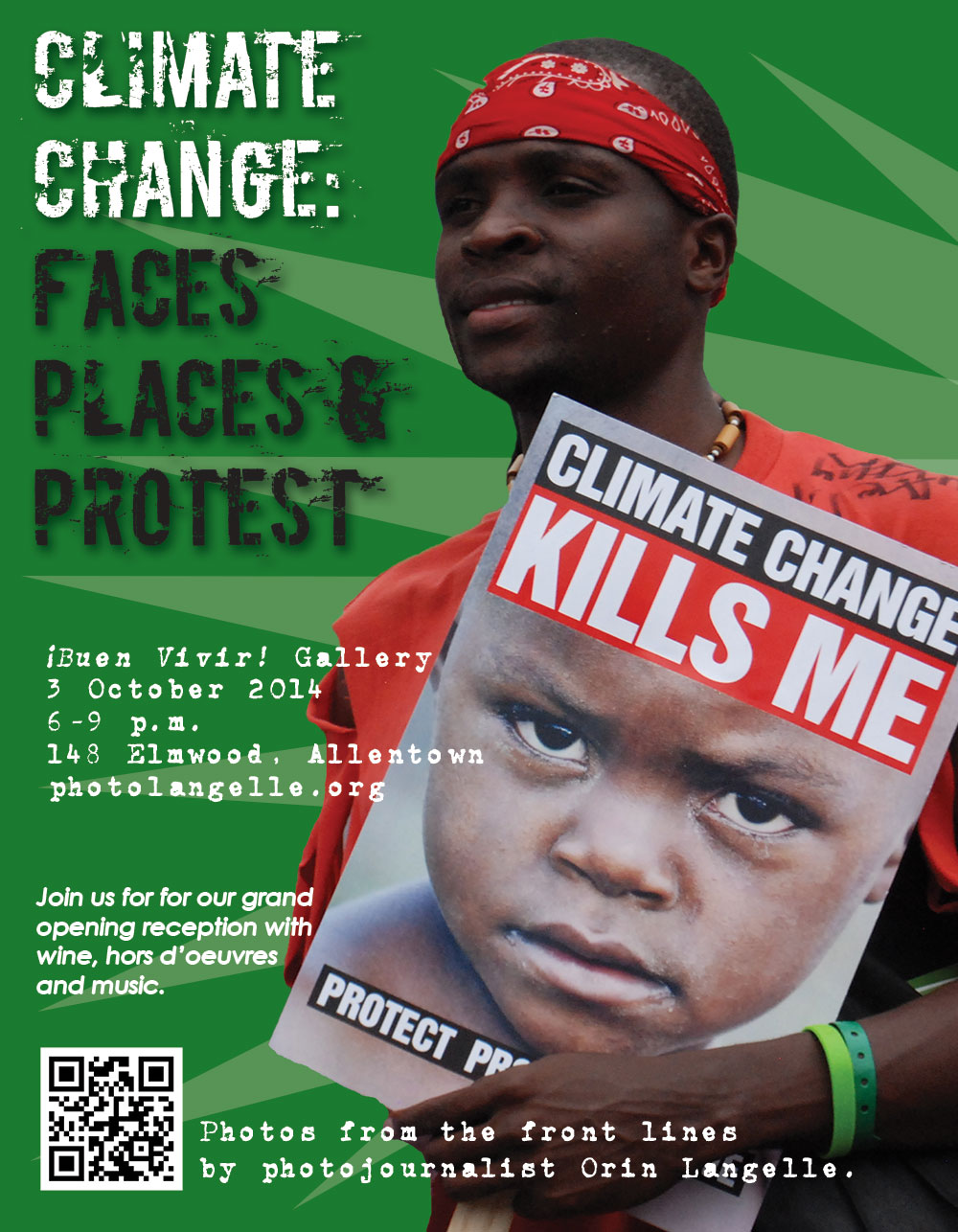
Note: The photos in the upper right and lower left of this poster were taken in the indigenous village Amador Hernandez on the border of the Montes Azules Biosphere Reserve by Global Justice Ecology Project Board Chair Orin Langelle during an investigative trip to Chiapas, Mexico with GJEP’s then-Communications Director Jeff Conant.  The trip was organized in March 2011 to identify and expose the impacts on the indigenous communities in the Lacandon Jungle of Chiapas, Mexico that would be caused by the California-Chiapas-Acre (Brazil) REDD agreement, which was announced at the Cancun climate talks in December 2010.  The series of events this week in California against REDD (also see previous blog post)  feature Orin’s photography as well as GJEP’s film “A Darker Shade of Green: REDD Alert and the Future of Forests.”  For more, go to no-redd.com

3 Comments

Filed under Actions / Protest, Climate Change, Commodification of Life, Commons, Events, False Solutions to Climate Change, Forests, Forests and Climate Change, Green Economy, Greenwashing, Indigenous Peoples, Land Grabs, Photo Essays by Orin Langelle, Politics, REDD, The Greed Economy and the Future of Forests

Eulogy for Barry Commoner

By Phil Bereano, Profesor Emeritus, University of Washington, October 2, 2012  

Note: The following was received by GJEP Executive Director Anne Petermann via email and will be read during the UN’s Cartagena Biosafety Protocol meeting today.

-The GJEP Team

Photo: Los Angeles Times

On behalf of the green NGOs participating in the 6th Meeting of the Parties to the UN’s Cartagena Biosafety Protocol, in Hyderabad, India (regulatng the cross-bundary movement of GMOs), I am introducing the following statement at the Wednesday morning plenary:

We have learned yesterday of the death of Barry Commoner–a great American scientist and, as the New York Times called him, the “lifeguard” of Planet Earth–this past Sunday, in New York City.

One of the first individuals to push for a greater involvement of scientists and other technical workers with society’s problems, he co-founded the Scientists Institute for Public Information in 1963 to provide relevant information to journalists and citizen activists. This effort to help empower citizens increased the quality and authenticity of public decision-making. Citizens were thus emboldened to become watchdogs, monitoring governmental and corporate activities and joining collectively to correct them; he insisted that civic society had the right to demand accountability. Commoner’s critique of capitalism’s heedless pursuits of profits regardless of external cost had a profoundly moral basis. He saw social justice concerns linking environmentalism, gender equality, issues of racial harmony, controlling militarism.

In our own field of biosafety, Commoner was, in the words of the Times, “a founder of modern ecology and one of its most provocative thinkers and mobilizers in making environmentalism a people’s political cause”. He was associated with the Council for Responsible Genetics, the world’s first NGO to take up the issues of genetic engineering (in the 1980s). In February of 2002, he authored one of the most profoundly important articles for laypeople on the subject of genetic engineering, “Unraveling the DNA myth: The spurious foundation of genetic engineering” (Harper’s Magazine)which exposed “the Central Dogma” that somehow DNA was solely determinative of an organisms life.

In 1970 at the time of the first Earth Day, Time magazine featured him on its cover as the “Paul Revere of Ecology,” referring to the American Revolutionary who warned citizens of danger from approaching British troops. Yes, Commoner sounded some of the first alarms over biosafety; we in the NGO community remember him with pride as we continue to respond to threats to the Earth’s well-being.

Phil Bereano
Prof Emeritus
Uiversity of Washington
& Washington Biotechnology Action Council

1 Comment

Filed under Events, Genetic Engineering, Green Economy, Media

Declaration of Chiapas in REDDellion: Enough of REDD+ and the Green Economy

Note: Global Justice Ecology Project broke the story about the California-Chiapas-Acre REDD Deal and the impacts it would have on the Indigenous populations of the Lacandon jungle in Chiapas, Mexico following a trip to Indigenous village Amador Hernandez, deep in the heart of the Lacandon jungle in March of last year.  To view the photo essay from this trip, click here.  To view the 28 minute film we produced on the topic, click here.

–The GJEP Team

Declaration of Chiapas in REDDellion:

Enough of REDD+ and the Green Economy

The Spanish version can be downloaded at http://reddeldia.blogspot.mx/

From September 25-27, 2012, subnational governments  from six countries will arrive in the city of San Cristóbal de las Casas, Chiapas, México, to promote and advance advance the new shadow program with which they hope, by way of investors and their government supporters, to privatize tropical forests. It is called REDD+ (Reducing Emissions from Deforestation and Forest Degradation), and its justification is the climate crisis. The  17 state or provincial governments that will participate are: Chiapas and Campeche in México; Aceh, Central Kalimantan, East Kalimantan, West Kalimantan, Papua and West Papua in Indonesia; Acre, Amapá, Amazonas, Mato Grosso and Pará in Brasil; California and Illinois in the United States; Madre de Dios in Perú; and Cross River State in Nigeria. This group is hoping to advance, by way of this shadow mechanism, the privatization of Mother Earth, 1) in order to appropriate her resources and services (the objective behind bio-conservation, as the governor of Chiapas calls his REDD+ program in the Lacandon Jungle), 2) to elevate the unsustainable production of biofuels, destroying, in their wake, all forms of life, and 3) to rupture the main historic obstacles to capital in the forests and jungles of our nations: culture and community organization. All of this comes clothed in the concept of the “green economy”.

Continue reading

5 Comments

Filed under Actions / Protest, Bioenergy / Agrofuels, Carbon Trading, Chiapas, Climate Change, Corporate Globalization, Events, False Solutions to Climate Change, Forests, Forests and Climate Change, Green Economy, Indigenous Peoples, Land Grabs, Latin America-Caribbean, REDD, Rights, Resilience, and Restoration